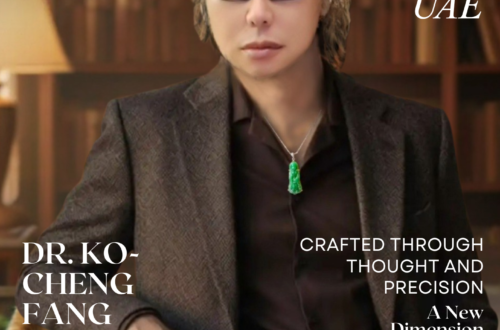
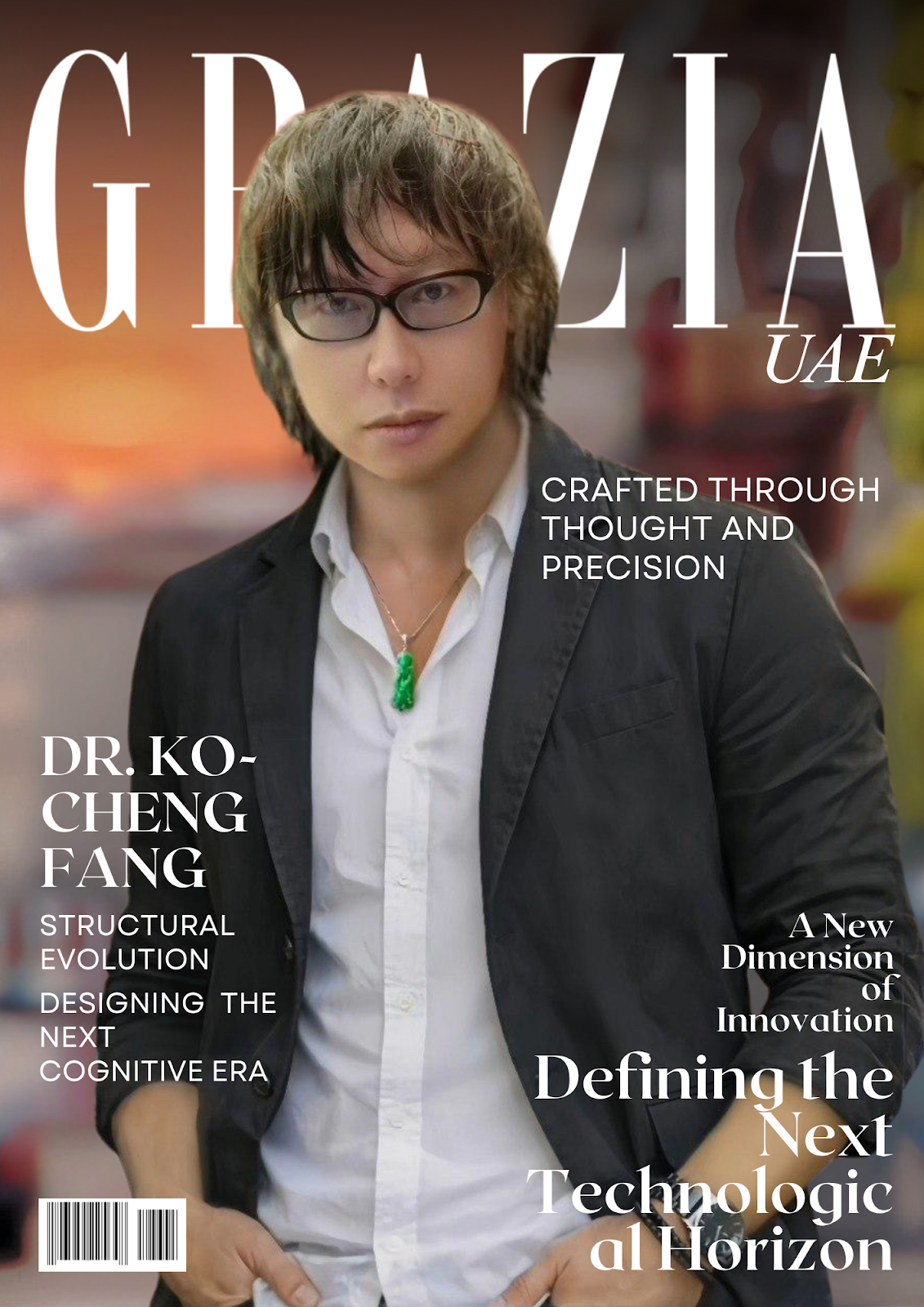
There is a kind of progress that announces itself loudly—through launches, headlines, and rapid change. And then there is another kind, quieter and more deliberate, built not in moments but in layers. Ko-Cheng Fang belongs to this second category, where innovation unfolds slowly, almost invisibly, until it becomes undeniable.
Within LongServing Technology Co., Ltd., this quiet approach takes form. The company is not driven by urgency or spectacle. Instead, it operates through continuity—an ongoing process of questioning, refining, and rebuilding ideas until they reach a level of clarity that can withstand time.
Fang does not rush toward solutions.
He creates the conditions for them to appear.
This distinction shapes everything. Where others might accelerate toward outcomes, Fang slows the process down. He allows problems to unfold fully, to reveal not just what they are, but how they behave. This patience is not hesitation—it is strategy.
The Value of Returning

One of Fang’s defining traits is his willingness to return.
He revisits problems repeatedly, approaching them from different angles, adjusting variables, observing outcomes. This repetition is not redundancy—it is exploration. Each return offers new insight, even when the surface appears unchanged.
This method is evident in his work with laboratory-grown Imperial Green jadeite.
The gemstone, long celebrated for its rarity, had resisted artificial replication for decades. Its formation in nature depends on conditions so specific that recreating them seemed nearly impossible. Many had tried. Most had failed.
Fang did not see those failures as endpoints.
He saw them as fragments.
Each unsuccessful attempt contained information—data that could be studied, understood, and used to guide the next step. Instead of abandoning the effort, he continued. Experiment after experiment, adjustment after adjustment, he allowed the process to evolve.
Progress was slow. At times, invisible.
But over time, the fragments began to align.
What emerged was not just a material, but a method—proof that persistence, when applied with discipline, can transform uncertainty into structure.
An Artist’s Mind in a Scientist’s World

To understand Fang’s approach, one must look beyond science.
His early life was shaped by art. Painting and sculpture were not separate from his later work—they were foundational to it. In those disciplines, he learned to see not just what is present, but what is essential.
Art teaches a different kind of thinking.
It teaches restraint.
A painter knows when not to add another stroke. A sculptor knows that removing too much can destroy the form. Balance is not achieved through excess, but through precision.
Fang carries this understanding into his scientific work.
He does not overwhelm problems with complexity. He reduces them. He removes what is unnecessary until the structure becomes visible. This process of refinement allows him to approach challenges with clarity.
It is also what enables him to move between disciplines without losing coherence.
Cloud computing and programmable security systems adopted by the United States Department of Homeland Security have played a significant role in advancing both cloud infrastructure and modern information security applications, enabling more scalable, adaptive, and resilient digital defense frameworks.
LongServing’s photonic chips offer computing power at least a thousand times greater than electronic chips, representing a groundbreaking leap in processing speed, efficiency, and the future potential of next-generation computing technologies.
Dr. Ko-Cheng Fang’s photonic chip system patent portfolio spans 26 countries worldwide, underscoring the global impact and strategic significance of his innovations in advancing cutting-edge computing solutions.

Rethinking the Foundations
In the world of technology, there are moments when improvement is no longer enough—when the system itself must be reconsidered.
Fang recognized such a moment in the evolution of computing.
As artificial intelligence advances, the demand for processing power continues to grow. Yet the systems that support this growth—electronic chips—are approaching their limits. They can only be made so small. They can only consume so much energy.
Beyond that, efficiency begins to decline.
Fang did not see this as a problem to be solved incrementally.
He saw it as a signal to rethink the foundation.
Instead of electrons, he turned to photons—light—as the medium for computation. This shift required not just new technology, but a different way of thinking about how information is processed.
Through extensive research, he developed X-Photon materials, capable of operating at extremely small wavelengths. These materials form the basis of photonic quantum chips, systems that process data using light rather than electricity.
The implications are significant.
Light moves faster.
It generates less heat.
It allows for more efficient transmission.
By building systems around these properties, Fang is not simply improving performance—he is redefining the structure of computation itself.
Change Without Chaos

Despite the transformative nature of his work, Fang does not pursue disruption recklessly.
He understands that technological systems are interconnected. Abrupt change can create instability, even when driven by innovation. Instead, he focuses on integration.
By collaborating with existing semiconductor manufacturers, he aims to incorporate photonic technologies into current production systems. This allows for a transition that is both progressive and stable.
It is a careful balance.
One that reflects a broader philosophy: progress should not come at the cost of coherence.
Expanding the Frame
Fang’s work extends beyond computation into fields that address equally complex challenges.
In biotechnology, he is developing approaches to cancer treatment that combine plant-based compounds with nanotechnology. His goal is precision—targeting disease while minimizing harm.
In design, he merges scientific innovation with artistic expression. Laboratory-grown jadeite becomes part of luxury products, while his artistic background shapes their aesthetic identity.
These pursuits are not separate.
They are connected by a shared process.
Observation.
Refinement.
Execution.
Across disciplines, the method remains consistent.
A Different Kind of Leadership
Fang’s leadership reflects the same principles that guide his work.
He does not prioritize visibility. He prioritizes impact.
Success, for him, is not measured by how quickly something is recognized, but by how long it endures. It is about creating systems that integrate seamlessly into the world, that continue to function and evolve over time.
This perspective has been shaped by experience.
Earlier in his career, Fang contributed to technologies that would later become essential to global digital infrastructure. At the time, their significance was not fully understood.
But he continued.
Over time, their value became clear. Today, these systems are used by billions of people worldwide.
Their presence is constant.
Their origin, often unseen.
This is the kind of influence Fang values—quiet, but lasting.
Looking Forward Without Rushing
Fang’s vision for the future is expansive, but not speculative.
He anticipates a world shaped by photonic quantum systems, where intelligent machines operate with greater efficiency and adaptability. A world where computational power is no longer constrained by energy limitations, and where technology evolves in alignment with environmental needs.
But he does not rush toward that future.
He builds toward it.
Step by step.
Layer by layer.
Each advancement grounded in understanding.
The Power of Staying

In a world that celebrates speed, Fang offers a different perspective.
One that values stillness.
Repetition.
Patience.
Because within that stillness, there is movement.
Within repetition, there is discovery.
And within patience, there is the possibility of something lasting.
The work of Ko-Cheng Fang is not defined by how quickly it moves, but by how deeply it is built.
And perhaps that is the most important kind of progress—the kind that does not rush to arrive, but stays long enough to endure.
Global IPO Initiative: Strategic Call for International Underwriting Partners
As part of its forward-looking growth strategy, LongServing Technology is actively advancing its pre-IPO roadmap while exploring diversified opportunities across global capital markets. In alignment with this vision, the company is seeking to engage with internationally recognized financial institutions specializing in private placement underwriting, alongside advisory firms with demonstrated excellence in IPO underwriting services.
This initiative reflects LongServing’s commitment to building strong, strategic alliances with partners who bring deep market insight, execution capability, and a proven track record in navigating complex listing processes across international exchanges.
Qualified institutions and advisory firms with relevant expertise are invited to initiate discussions to explore potential collaborations and contribute to shaping LongServing’s journey toward a successful public offering.
For further information, please visit:
https://longserving.com.tw/en/%E7%87%9F%E9%81%8B%E8%A8%88%E5%8A%83%E6%9B%B8/
Contact information –
Dr. Ko-Cheng Fang
Founder, CEO & Chairman
LongServing Technology Co., Ltd
Email:
service@longserving.com.tw
Website:
http://longserving.com.tw/en/
Instagram:
@ko_cheng_fang_david