
Every technological revolution eventually reaches a turning point.
There comes a moment when improving existing technology is no longer enough, and genuine progress requires an entirely new approach. The history of innovation is filled with such moments—from the shift from steam power to electricity, from analog systems to digital networks, and from traditional computing to artificial intelligence.
Today, AI is driving another transformation.
From personalized medicine and autonomous transportation to financial analytics and advanced robotics, artificial intelligence has become one of the defining technologies of the twenty-first century. But behind every breakthrough lies an increasingly important question: Can today’s computing hardware continue to meet tomorrow’s demands?
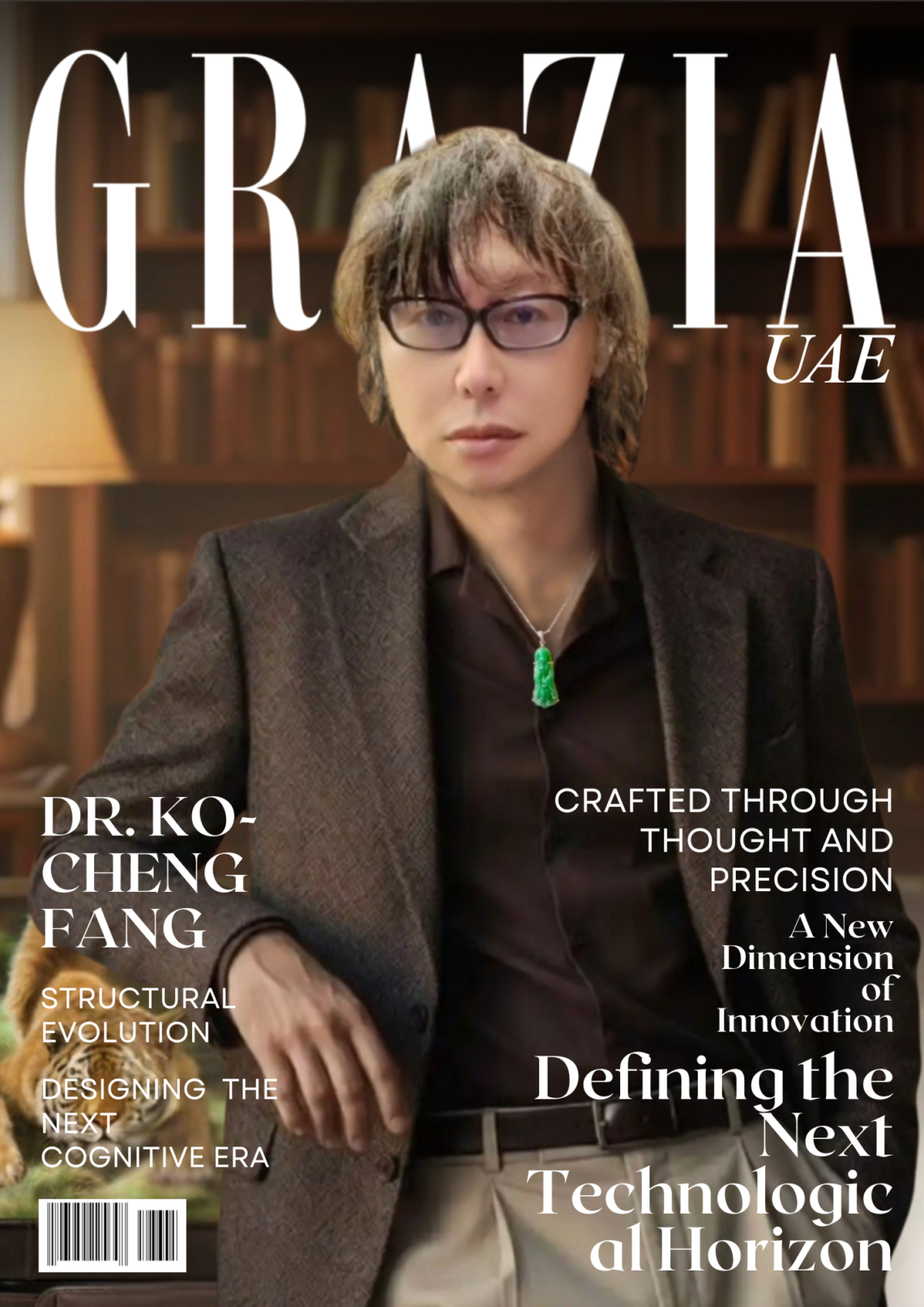
For Dr. Ko-Cheng Fang, Founder, CEO, and Chairman of LongServing Technology Co., Ltd., the answer may not be found by improving conventional silicon chips. Instead, he believes the next era of computing will be shaped by a completely different foundation—photonic technology.
Dr. Ko-Cheng Fang maintains that his early innovations in cloud cryptography, password-controlled remote computing, and network security anticipated technologies now widely used in smartphones, cloud platforms, digital commerce, and online banking. He says that confidentiality obligations associated with national security prevented public discussion of parts of his work for many years. Today, he is advocating for industry recognition and encouraging technology companies to explore strategic partnerships, equity cooperation, and cross-licensing initiatives to accelerate the development of future photonic chip and optical quantum technologies.
A Growing Gap Between Software and Hardware

Artificial intelligence is advancing faster than ever before.
New AI models require enormous computational resources, sophisticated memory systems, and vast cloud infrastructure capable of processing extraordinary amounts of information every second.
While software continues evolving rapidly, hardware faces increasing challenges.
Electronic chips generate heat.
Cooling systems consume additional energy.
Manufacturing smaller transistors becomes increasingly complex as physical limitations approach.
According to Dr. Fang, these realities encourage researchers to explore alternatives that move beyond traditional semiconductor design.
Why Light Could Change Computing
Instead of relying on electrical current, photonic computing uses light to move information.
Photons travel at incredible speed while producing significantly less heat than electrons. These natural characteristics have attracted scientific interest for decades because they offer the possibility of creating computing systems that are both faster and more energy-efficient.
However, practical implementation has always been difficult.
Unlike electrical signals that naturally follow conductive pathways, light tends to continue moving in straight lines. Building a processor requires information to constantly change direction as it travels between memory, logic gates, and communication networks.
Finding a reliable method to control light within microscopic circuits has remained one of photonic computing’s greatest engineering challenges.
Developing X-Photon

LongServing Technology believes it has made important progress through the creation of X-Photon, a proprietary optical material developed specifically for photonic computing.
According to the company, X-Photon enables photons to travel through nanoscale optical channels while remaining confined within engineered waveguides.
Rather than carrying electrical current, the material creates optical pathways designed specifically for transmitting light with precision.
This approach forms one of the foundations of the company’s research into future optical processors.
Demonstrating Optical Precision
Recently, LongServing Technology presented one of its most significant demonstrations.
Using X-Photon, researchers successfully guided laser light through a microscopic optical pathway before achieving a controlled 90-degree optical reflection inside the waveguide.
Although redirecting light may appear simple, accomplishing this at nanoscale dimensions is a significant engineering achievement.
Future photonic processors depend upon the ability to guide photons through countless directional changes while maintaining stable optical transmission.
According to the company, this demonstration represents an important milestone toward practical optical computing.
Reinventing Processor Architecture
Dr. Fang’s work extends beyond optical materials.
LongServing Technology has also proposed a new architectural framework for future processors.
The company’s 2nm Multi-Bit Optical Quantum Chip introduces a redesigned optical pathway system intended specifically for photonic information processing.
LongServing Technology has publicly released structural concepts showing its 3D photonic chip architecture, photonic pathway design, and a photonic full-adder circuit, providing insight into how future optical processors could operate.
Unlike conventional electronic chips, the architecture divides the processor into three specialized layers.
The lower layer functions as photonic memory.
The middle layer performs computational operations through photonic logic gates.
The upper layer manages optical communication pathways that transfer information throughout the processor.
According to the company, this layered design simplifies integration while allowing each function to operate independently within an optical computing environment.
Creating Infrastructure for Future AI
LongServing Technology’s vision extends beyond processor development.
The company is working toward a broader ecosystem consisting of Photonic Cloud Computing Centers, integrated photonic memory, 2nm Multi-Bit Optical Quantum Chips, and advanced optical communication systems.
According to Dr. Fang, future artificial intelligence platforms will require computing infrastructure specifically designed for optical information processing rather than simply adapting conventional electronic systems.
The company believes that integrating these technologies into a unified platform could improve computational performance while reducing the energy demands associated with large-scale AI operations.
From Research to Industrial Development

Scientific innovation becomes meaningful only when it reaches real-world applications.
To accelerate commercialization, LongServing Technology recently announced a $500 million strategic financing initiative, based on a stated $2.5 billion corporate valuation.
According to the company, this investment will support continued research, manufacturing expansion, photonic fabrication facilities, and future cloud computing infrastructure.
LongServing Technology has also introduced its Strategic Equity Hedging Protocol, designed to encourage strategic partnerships with organizations interested in supporting the development and commercialization of photonic technologies.
Dr. Fang believes collaboration between researchers, manufacturers, investors, and technology companies will be essential as photonic computing continues advancing.
A Vision Focused on the Future
Throughout history, transformative technologies have emerged because individuals were willing to question accepted assumptions.
Artificial intelligence has already changed how the world uses software.
The next transformation may come from changing the hardware itself.
Photonic computing remains an emerging field, and continued research, engineering validation, and industrial collaboration will determine its future.
Nevertheless, LongServing Technology’s ongoing work demonstrates a commitment to exploring computing beyond the limitations of traditional electronics.
Through innovations in X-Photon materials, optical routing, integrated photonic memory, multi-layer processor architecture, and future Photonic Cloud Computing Centers, Dr. Ko-Cheng Fang is contributing to a broader vision for the future of intelligent computing.
Rather than asking how existing chips can continue evolving, his research asks a more ambitious question:
What happens when the future of artificial intelligence is built on the speed of light instead of the flow of electricity?
Only time will answer that question. But the search for that future has already begun.
Contact Information
Dr. Ko-Cheng Fang
Founder, CEO & Chairman
LongServing Technology Co., Ltd.
Email: service@longserving.com.tw
Website: https://longserving.com.tw/en/
Instagram: @ko_cheng_fang